I would like to apologize to all my readers for my long absence. After my family moved to Utah we experienced quite a few changes. There have been some pretty tough times over the last two years, and when push came to shove I had to let go of my blog for a while. I am thankful to all of the emails and letters of support I have received over the last couple years, and I do apologize for how few I was able to respond to. I have recently moved back to the city of San Francisco, and have resumed my career in child care.
As a quick announcement, I have recently contracted with Day One in San Francisco to teach my Infant Acupressure techniques in their San Francisco location. The first class will be held on January 26th 2012. For more information, or to register, please visit their site.
Thank you all for your continued support and interest. As before, I am interested in any feedback or questions you may have for me. Happy parenting!
- Naomi
Showing posts with label teething. Show all posts
Showing posts with label teething. Show all posts
Friday, December 2, 2011

Monday, August 31, 2009
5 tips for avoiding the biggest mistakes parents make in the first 2 years.
Making the right choices for your baby's safety and proper
development is the first priority of nearly all parents. However,
there is so much conflicting advice out there, and so many
different philosophies on how to raise your children, it can be
very overwhelming. Many parents find themselves just winging
it as they face the small day-to-day decisions, and that is
where some of the biggest mistakes can be made. Here are a
few common mistakes that parents often make, so you can
watch out for them.
1. Too much T.V.
I used to be a great fan of the "Baby Einstein" videos, and
generally scoffed at the idea that a little T.V. now and then
could be harmful to babies. After all, T.V. today is much
different than it was when I was a kid, the educational aspects
seemed to outweigh the idea that T.V. could be harmful. That
was before the latest study came out showing that babies who
were exposed to T.V. on a regular basis during their first year
displayed a significant developmental delay in many areas.
Most notably, their social development was affected. I have
seen myself the positive effects on a borderline-autistic toddler
who had T.V. removed from his routine. The social skills
flourished and the delays in his gross motor coordination also
dissipated. I highly caution parents against falling into this bad
habit, the effects on your baby are likely to be negative and any
potential positive benefits are generally over estimated or
non-existent.
2. Weening too early.
This is a difficult one, because there are often reasons both
personal and physical why a mother must help her baby ween
early. However, whether your baby is breast fed or bottle fed and
whether she eats breast milk or formula, most of her nutrition is
going to come in fluid form for the greater part of the first 2
years. Even after she is consuming three or more regular meals a
day, a baby's digestive tract is not strong enough to break down
many foods. Even when you puree table foods, they will only yield
a fraction of their potential nutrients to an immature digestive
system. I recommend that parents always feed their baby a bottle
first and then top off with the solid foods, instead of allowing
your little munchkin to fill up on indigestible roughage before
trying to squeeze a little nutritious breast milk or formula in
afterwards.
3. Unsafe teething toys.
A baby will chew on anything. From a pinky to a pencil, everything
is fun for him to munch on. But there are many common things
that a parent might want to think twice about before allowing in
their baby's mouth. The number one things ironically, are fingers,
yours, or other peoples, especially children's. Hands go
everywhere, they touch everything, and they get washed way too
rarely. Make a habit of asking visitors to your home to wash their
hands as they enter, and be sure to always wash your own hands
when you get home. Carrying a bottle of hand sanitizer with you
is another good tool for keeping yourself baby-ready. Another
terrible chew toy is a key ring. Keys are filthy. They have many
crevices where germs can hide, and no one ever washes them.
However, babies love to chew on the cool metal and shake them
to hear the jingling they make. I highly recommend using a
sterling silver multiple-ring teething ring in the place of a key
ring. Watches, necklaces and other jewelry are also terrible choices
for teething toys. Jewelry, even if it is well-made, is rarely made
strong enough to hold up to the drooling, shaking and chewing
abuse that a baby can put it through. Besides the risk of illness
from the types of germs that might be hiding in the crevices of
your jewelry, the main risk is that your jewelry might come apart
and become an immediate choking hazard. Beaded necklaces are
at an especially high risk for this problem.
4. Too little sunshine.
From the moment your little butter cup takes her first stroll
outside you will probably find that you have suddenly become
hyper-aware of the amount of sun exposure she gets. Though
many pediatricians do not recommend sunscreen for infants,
others prescribe the liberal application of sunscreen from the
first month on. Many parents end up covering their babies from
stem to stern with layers of cloth and sunscreen any time they
might encounter a drop of unfiltered sunlight. The problem with
this is that the best source for vitamin D is from sunlight and
vitamin D is a wonderful mood booster and sleep regulator. As
babies become more and more shielded from the sun, reports of
sleep problems continue to rise exponentially. While you do want
to avoid burns at all cost, gentle exposure to indirect sunlight is
wonderful for your little sun bunny. Practice moderation, and use
common sense, but do regularly give your baby a dose of the
sweet warmth of natural light. You'll both sleep better, and feel
better.
5. Not enough rough-housing.
While, like anything, physical play can be taken to the
extreme, regular tossing, swinging and rolling of your baby
after 2 months has enormous benefits. While your baby is
becoming aware of his position in relation to the world he
will also be developing his sense of balance and a rudimentary
grasp of general physics principles. Of course this can also be
called becoming sturdy, but whatever you call it, it is an
important part of physical development. Fathers are generally
very good at engaging in this type of play, but mothers and
other caretakers can do it just as well. I recommend that this
type of play be done over soft surfaces, like carpets and
blankets, and that the delicate nature of your baby's joints be
considered. But as long as you are safe, this type of fun is
healthy and very beneficial to your little gymnast.
One mistake that I don't have an answer for is the tendency of parents
to beat up on themselves for every mistake that they make. Give
yourself a break, and try not to let every little thing that you wish you
had done differently keep you up at night. Parents today are some of
the most well educated and responsible people ever to raise babies in
this world. By all means, educate yourself, and do the best you can, but
always remember that babies are resiliant and as long as you are giving
them love and doing your best, they will probably be okay. If you have
found these tips helpful, please forward them to any new or expecting
parents you know. Questions, comments and suggestions are always
welcome. Happy parenting!
Friday, July 10, 2009
5 tips for infant acupressure points.
Acupressure is an ancient form of natural healing that uses pressure applied to certain spots on your body. Most acupressure for adults uses intense pressure over several minutes, but for babies this is way to rough and invasive. However, there are a few places that you can use gentle pressure to help remedy some everyday troubles. For babies under 3 months very gentle pressure should be used for a total of only about 10 to 20 minutes a day. Just a few seconds of softly pressing on each point every few hours should be sufficient. In addition to these five acupressure points, I have listed some more for reducing your baby's fever in another post. Acupressure treatments should only be used in addition to the medical advice of your pediatrician, not as a substitute.
1. Congestion relief points.
When your baby is stuffed up it is one of the most miserable things in the world. She can't eat, can't sleep and can't suck on her pacifier. While using a little saline water and a suction bulb is a great way to remove mucous from her nasal cavity, the swollen tissue that is constricting her ability to breath through her nose is the real issue. Just next to the largest part of each of her nostrils is a pressure point that helps reduce inflammation of the nasal passages. Simply place a finger on either side of he nose at the widest part, and gently massage in a circular motion while counting to 10. This should provide her with some relief immediately, and help to resolve the underlying cause of the inflammation more quickly. You can use these points up to 6 times in a day, spaced a couple hours apart.
2. Cough suppressant points.
Sometimes, even though your baby seems to be fully recovered from an illness, a nagging cough will keep bothering your little Snuffleupagus. This cough is usually a dry hacking one, but even if it is a bit croupy these pressure points can offer a little bit of relief. These pressure points are located on the top section of your baby's index fingers just above the knuckles. Do not pinch when you apply the pressure, just holding onto your baby's fingers will be sufficient. Try to hold on for about 5 seconds whenever your baby has a rough bout of coughing. The cough should be significantly calmed while you hold his fingers, and the duration of the cough over all should be reduced significantly.
Sometimes, even though your baby seems to be fully recovered from an illness, a nagging cough will keep bothering your little Snuffleupagus. This cough is usually a dry hacking one, but even if it is a bit croupy these pressure points can offer a little bit of relief. These pressure points are located on the top section of your baby's index fingers just above the knuckles. Do not pinch when you apply the pressure, just holding onto your baby's fingers will be sufficient. Try to hold on for about 5 seconds whenever your baby has a rough bout of coughing. The cough should be significantly calmed while you hold his fingers, and the duration of the cough over all should be reduced significantly.

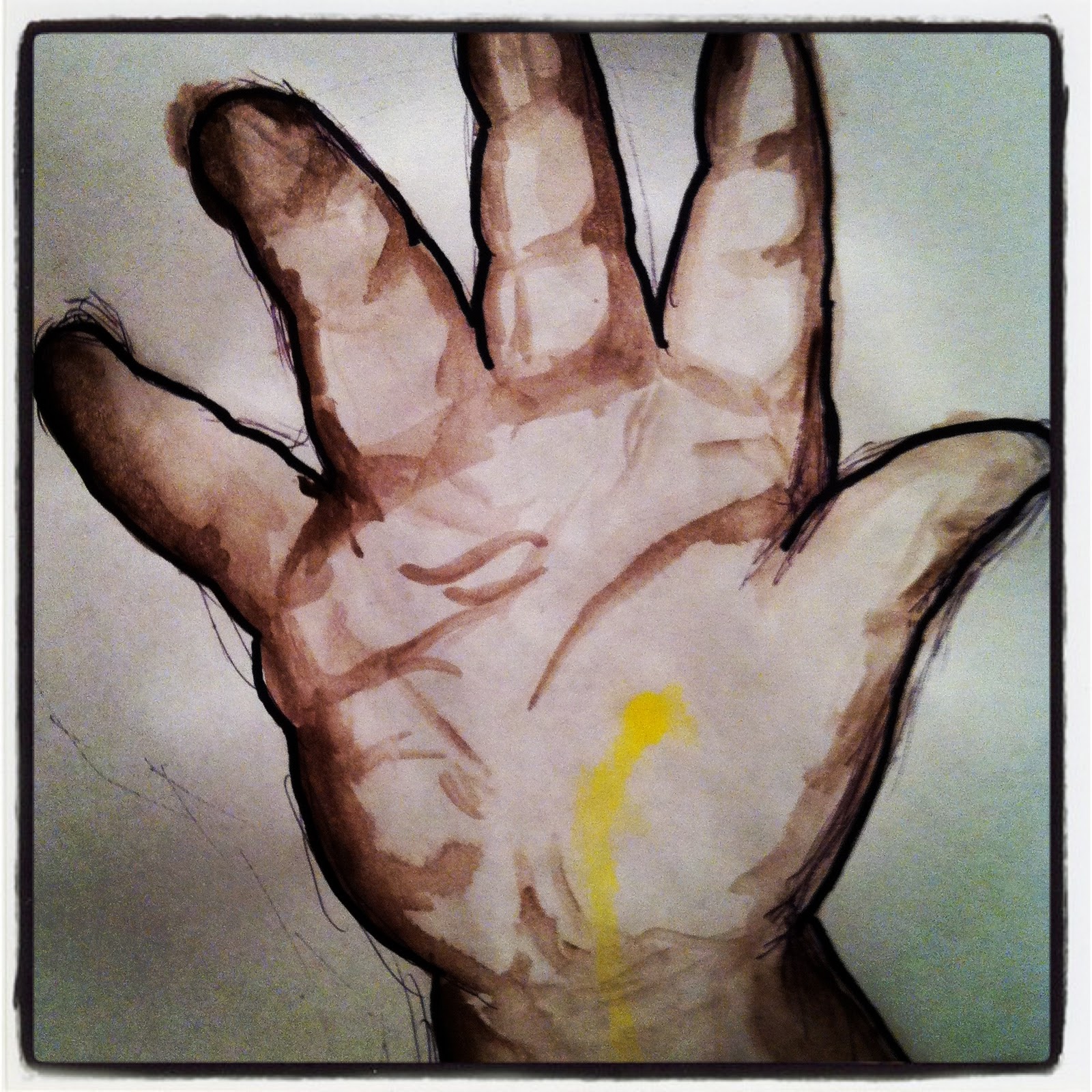
3. Teething pain relief points.
4. Sleep inducing point.
This is by far my favorite pressure point for babies. It is one of the most effective acupressure points for infants that I have found. If you are trying to soothe your baby to sleep, and you have addressed all of the usual causes for wakefulness (hunger, diaper, warmth, gas and burping), try this pressure point. Between and slightly above your adorable insomniac's eyebrows on her forehead is what I like to call your baby's "sleep button". Just a soft stroking touch for anywhere between 10 and 20 seconds will prompt your baby to relax and close her eyes. Even if she does resist and fight the relaxation, in a few minutes after you stop she will most likely succumb to her exhaustion.
5. Fever reduction points.
To help reduce your baby's fever, you can try these pressure points located at the base of each of your little angels thumbnails. A gentle non-pinching, grasp of the thumbs for about 10 seconds every 2 to 3 hours throughout the day should help bring down your baby's fever faster and more effectively than simply waiting it out. Though I have several other tips for reducing a baby's fever that I personally prefer, when I need to try something extra, these pressure points are a good thing to try. There are also three more points for quickly lowering dangerous fevers in another post.
Though infant acupressure is lesser known, it is a great tool to have in your bag of parenting tricks. The wonderful thing about these pressure points is that they do not go away, they grow with your child, and you can use them as long as your sweet little panda will let you. I still use the sleep button, cough suppressant and the teething points on my son who is now 2. If you have found these tips helpful please forward them to any new or expecting parents you might know. Questions and comments are always welcome. Happy parenting!
By: Naomi Tripi
http://tripibabytips.blogspot.com
There is a NEW post from NAOMI up today (9/5/14)! Check it out HERE.
Thursday, May 28, 2009
5 tips for natural teething remedies.
It happens to every new parent. You just got things settled, your baby is in a great routine, when out of the blue... teething strikes. Yikes! Teething! Whether that image brings up crying babies or painful nursing it's not a pleasant thought. Some types of discomfort that often accompany teething are: fever, diaper rash, facial rash, excessive salivation, upset stomach and, of course, tooth and gum pain.
1. Sterling silver or stainless steel teething rings.
There is a reason that key-rings are the unofficial teething toy of the known universe, babies find the feel of smooth cool metal on their gums unquestionably helpful in reducing inflammation and pain. However, key-rings are full of sharp edges and germ-filled crevices that make them less than ideal for your baby's safety. Substituting a classy and safe sterling silver ring is a great option. I recommend getting at least three, and have two chilling in the refrigerator while your baby chews on one. There are many beautiful designs, some more affordable than others. I personally like the multiple-ring styles.
2. Cool food teething sticks.
Whether you use a refrigerated bagel, carrot, cucumber or celery there is one important safety consideration to keep in mind with this technique. Do not let your baby chew on these things without your supervision. Any kind of food, no matter how soothing and comfortable for your baby to use, will eventually break down, and not always into easy-to-swallow portions either. To play it safe it is a good idea to use a mesh fresh food holder. The carrot is probably the best teething food before your baby has any teeth, but after those chompers pop out, it becomes a risk for choking. I personally like the celery the best, because even when it starts to break down, the thick fibers running the length of the stalk prevent any separating chunks from being too big. I recommend using older, wilted celery (still refrigerated and cold) because it has a more rubbery texture and is less likely to break off into chunks than if it was fresh.
3. Amber bead necklaces.
It is easy to come across criticism for this time-honored natural technique from those who haven't tried it, but if you are looking for a disappointed parent who doesn't believe it is effective after having tried it, you'll have a hard time finding one. The criticism focuses on the fact that the amber beads are choking hazards if separated from the necklace, and that the necklace itself is a choking hazard simply by virtue of the fact that it encircles the baby's neck. I have a solution for these issues though, take your amber necklace or bracelet and wrap it around your baby's ankle. Put a sock on over the beads to hold them in place next to the skin, and away from your baby's mouth. If your baby is at the "taking-off-my-socks-and-sucking-on-my-toes-is-the-funnest- thing-in-the-world" stage, simply put on a pair of footy-pajamas over the socks. You can find beautiful and natural amber necklaces for yourself and your baby here: http://www.amberartisans.com/ . I recommend buying two so one can be warming up in the sun while your baby is wearing the other one. Try to always warm the amber in the sun for an hour or two before letting your baby wear it because this softens the amber and mobilizes the oils that will help sooth your baby's pain.
4. Clove oil.
This natural local anesthetic is very potent and should be used with great care. One drop thoroughly diluted in 1 tsp olive oil should last for at least 8 applications. How you apply it is to take the mixture of olive oil and clove oil and dip a cotton swab into it, then quickly and carefully rub the cotton swab over your baby's gums. The clove oil has a nasty taste to it, so a quick feeding right afterward could help clear your baby's palate. It is very important not to over-use this mixture. It should only be applied about 4-6 times a day, and the best time to use it is at bedtime. A quick application before naps and night time sleep numbs the pain just long enough for your baby to fall asleep more easily.
5. Wooden teething rings sealed with beeswax.
No matter how you choose to help your baby get through the most painful moments of teething, they are going to want to chew on something. Hopefully these natural options can give you some ideas for what will work best for you and your little drool-factory. If you have any questions or comments don't hesitate to leave them, I'd love to hear your thoughts. And for my special Tripi's Tip of the Day check me out on everythingmom.com! Happy parenting!
Subscribe to:
Posts (Atom)



 Posts
Posts


