Showing posts with label holistic. Show all posts

Friday, July 10, 2009

5 tips for infant acupressure points.


Acupressure is an ancient form of natural healing that uses pressure applied to certain spots on your body. Most acupressure for adults uses intense pressure over several minutes, but for babies this is way to rough and invasive. However, there are a few places that you can use gentle pressure to help remedy some everyday troubles. For babies under 3 months very gentle pressure should be used for a total of only about 10 to 20 minutes a day. Just a few seconds of softly pressing on each point every few hours should be sufficient. In addition to these five acupressure points, I have listed some more for reducing your baby's fever in another post. Acupressure treatments should only be used in addition to the medical advice of your pediatrician, not as a substitute.

1. Congestion relief points.
When your baby is stuffed up it is one of the most miserable things in the world. She can't eat, can't sleep and can't suck on her pacifier. While using a little saline water and a suction bulb is a great way to remove mucous from her nasal cavity, the swollen tissue that is constricting her ability to breath through her nose is the real issue. Just next to the largest part of each of her nostrils is a pressure point that helps reduce inflammation of the nasal passages. Simply place a finger on either side of he nose at the widest part, and gently massage in a circular motion while counting to 10. This should provide her with some relief immediately, and help to resolve the underlying cause of the inflammation more quickly. You can use these points up to 6 times in a day, spaced a couple hours apart.

2. Cough suppressant points.
Sometimes, even though your baby seems to be fully recovered from an illness, a nagging cough will keep bothering your little Snuffleupagus. This cough is usually a dry hacking one, but even if it is a bit croupy these pressure points can offer a little bit of relief. These pressure points are located on the top section of your baby's index fingers just above the knuckles. Do not pinch when you apply the pressure, just holding onto your baby's fingers will be sufficient. Try to hold on for about 5 seconds whenever your baby has a rough bout of coughing. The cough should be significantly calmed while you hold his fingers, and the duration of the cough over all should be reduced significantly.

3. Teething pain relief points.
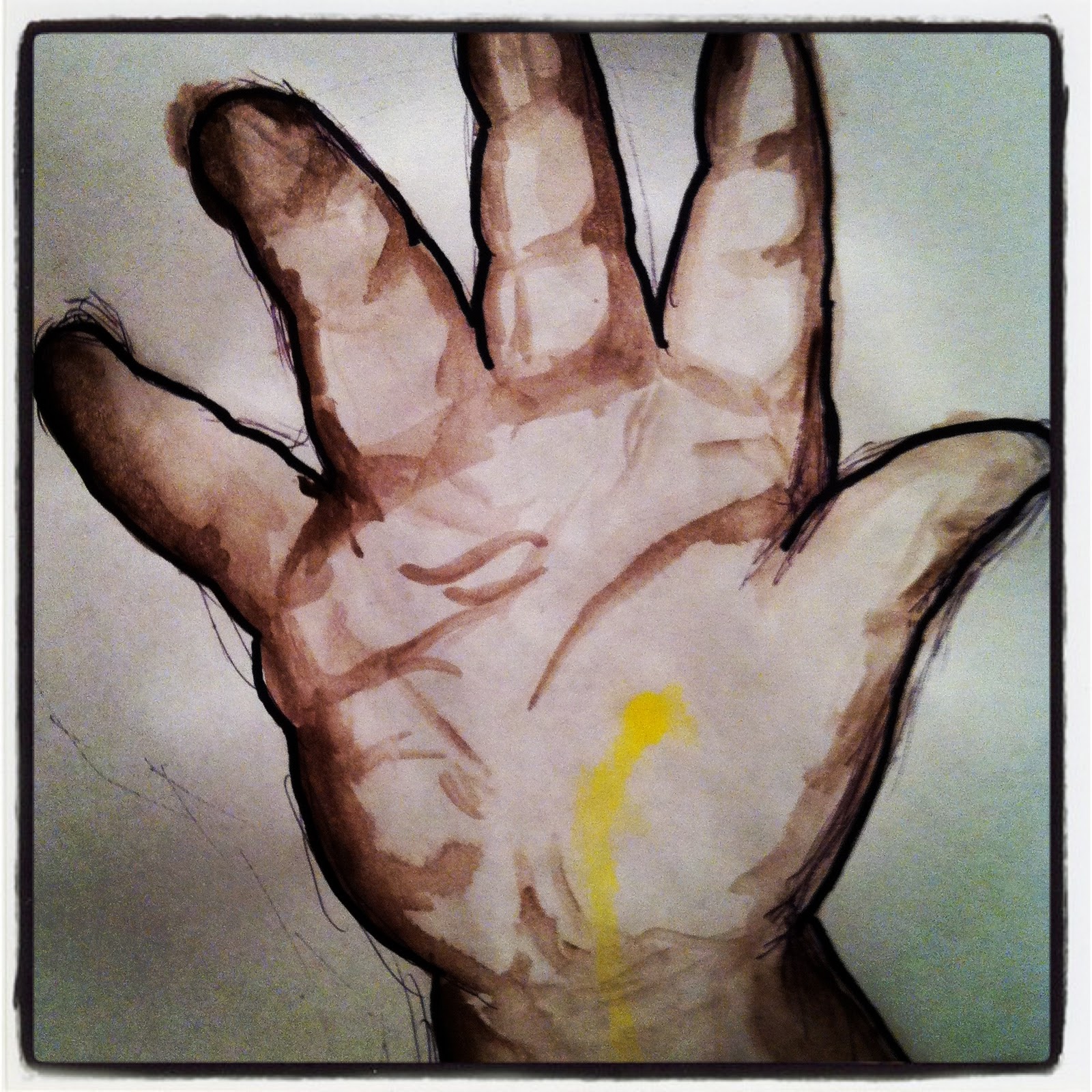
These pressure points can be used for pain located anywhere on your baby's head, but they are especially helpful for teething pain. These points are located on the largest part of the palms of your baby's hands near his thumbs. You can press on one or both of them, with a gentle massaging motion for about 10 seconds at a time every two hours or so. This should not only help reduce the pain in your baby's gums, but also reduce the volume of extra saliva. Since extra saliva is often a cause of facial rashes, diarrhea and diaper rash, even if your baby is not in obvious pain you may want to use these pressure points to help reduce your little geyser's production of excess saliva.

4. Sleep inducing point.
This is by far my favorite pressure point for babies. It is one of the most effective acupressure points for infants that I have found. If you are trying to soothe your baby to sleep, and you have addressed all of the usual causes for wakefulness (hunger, diaper, warmth, gas and burping), try this pressure point. Between and slightly above your adorable insomniac's eyebrows on her forehead is what I like to call your baby's "sleep button". Just a soft stroking touch for anywhere between 10 and 20 seconds will prompt your baby to relax and close her eyes. Even if she does resist and fight the relaxation, in a few minutes after you stop she will most likely succumb to her exhaustion.

5. Fever reduction points.
To help reduce your baby's fever, you can try these pressure points located at the base of each of your little angels thumbnails. A gentle non-pinching, grasp of the thumbs for about 10 seconds every 2 to 3 hours throughout the day should help bring down your baby's fever faster and more effectively than simply waiting it out. Though I have several other tips for reducing a baby's fever that I personally prefer, when I need to try something extra, these pressure points are a good thing to try. There are also three more points for quickly lowering dangerous fevers in another post.

Though infant acupressure is lesser known, it is a great tool to have in your bag of parenting tricks. The wonderful thing about these pressure points is that they do not go away, they grow with your child, and you can use them as long as your sweet little panda will let you. I still use the sleep button, cough suppressant and the teething points on my son who is now 2. If you have found these tips helpful please forward them to any new or expecting parents you might know. Questions and comments are always welcome. Happy parenting!

By: Naomi Tripi
http://tripibabytips.blogspot.com

There is a NEW post from NAOMI up today (9/5/14)! Check it out HERE.

Thursday, June 4, 2009

5 tips for treating diaper rash.


I am often asked what type of treatment I would recommend for diaper rash, my response is immediately, "what kind"? Many first-time parents are not aware that there are different kinds of diaper rash, so this question comes as a surprise to them. There are quite a few different kinds of diaper rash, and for each one there are distinct things that will work better than others. So for my tips today, I will focus on 5 of the most recognizable types of diaper rash, and the treatments that I personally have found to be most effective. Commercial treatments for diaper rash usually do a great job of covering the bases for several types of rash, but can sometimes have serious drawbacks if used on the wrong rash at the wrong time (what I look for in commercial brands can be found here). For example, Boudreaux's Butt Paste is a great natural ointment for the most common bacterial rashes, but if your baby has a chemical reaction rash or other weeping or bleeding diaper rash, it can cause a painful stinging sensation, and actually exacerbate the rash. If any ointment you are applying to your baby's rash seems ineffective or looks like it is actually causing your baby increased discomfort, discontinue using it at once and ask your pediatrician for advice.

1. For an acidic reaction diaper rash use yogurt, baking soda and Aquaphor.
This rash is purely a reaction to the heated contact between sensitive baby skin and acidic waste. Acidic waste can be caused by reflux, colic, and high acid content in breast milk as well as diarrhea. This rash looks similar to a rug burn, red and raw and will sometimes be bleeding slightly. The first order of business with this rash is to neutralize the acids, Yogurt is a soothing natural antacid, as is baking soda, and mixed together they make an effective paste. Or you can "wash" your baby's behind with yogurt followed by some sterile cool water and then powder the whole undercarriage with the baking powder. At the next changing (which should only be an hour or two later), be sure to use a sealant-type product like olive oil, Aquaphor, or Bag Balm to create a barrier between the stinging effects of urine, or further burning from another acidic bowel movement.

2. For a bacterial diaper rash use bamboo cloth, hair dryer and cornstarch.
This type of rash is one which thrives on a warm moist bottom. Bacteria are everywhere, but at times the balance between good and bad bacteria gets a bit off, and the result is skin irritation. This rash is a cousin to the bed-sore, and similar treatments are effective in treating it. This rash looks bright red, has an unpleasant odor and is probably weeping (oozing a fairly clear and slightly sticky liquid). There is probably more than one affected area, most commonly one quarter sized weeping area on each cheek. Keeping your baby clean and dry is the most effective treatment for this rash. Wash your baby's rear with cool sterile water using a soft naturally antibacterial bamboo wash cloth. Pay special attention to the deep crevice-type areas, since they are commonly effected as well. Use a hair dryer on low to make sure every part of your baby's booty gets completely dry. Apply cornstarch powder over all of your baby's rear and use bamboo cloth diapers (because bamboo is naturally anti-bacterial), if you have some, until the rash goes away.

3. For a diaper rash caused by an allergic reaction, use yogurt, baking soda and olive oil.
This rash is a combination of allergic-type hives and an acidic reaction. When a baby's body detects an undesirable element in the stomach, like an allergen or dangerous bacteria, it gets rid of it the fastest way it can. Often this means vomiting, but sometimes it means diarrhea. And because your baby's food has been forced out so quickly there is still a large amount of stomach acid in it. The allergen in the waste is giving your baby hives, and the acid is causing the hives to burn. This rash will look almost like your baby has little blisters on his bottom, but the bumps will be hard and not fluid-filled. Also, the bumps will only appear in areas where your baby's skin has come into contact with the waste. The entire area of waste contact will be red too, not just the bumps. To treat the acid, use yogurt (unless you are concerned that the allergen might be a dairy product) or baking soda, or a mixture of the two. Continue to change your baby's diaper regularly, and administer a sealant such as olive oil, Aquaphor or Bag Balm to protect your baby's hiney from further exposure to the allergen. The allergic reaction should go away on it's own, just make a mental note of possible food sources for the reaction and have your baby tested for allergies at your next visit to the pediatrician.

4. For a rash caused by a yeast infection, use yogurt, air, Bag Balm and (at times) an anti-fungal cream.
This rash thrives on sugar, and it will eat it where ever it can find it including in the living skin cells of your baby's sensitive bottom. This rash is particularly devious, because if you treat it with corn starch, the yeast, which love natural sugars, will thrive. While your baby's rear may be fairly red all over, what helps in identifying this rash is the red bumps that are in areas not usually too affected by diaper rash, like above the genitals. The red bumps are usually small and mainly visible outside of the crevice-type areas. Sensitive tissue will be red and swollen, but fairly dry to the touch and there might sometimes be a whitish "cheese-like" substance in some of the crevices of your baby's genitals. While your baby always has yeast bacteria present in their body, certain things, like antibiotics, can destroy the bacteria that usually feed on the yeast. These bacteria are highly concentrated in yogurt, and yogurt makes a great treatment for this kind of rash. Make sure your baby's bahookey is clean and dry, for long periods of time. This type of rash usually responds well to the "air-it-out" method. Try giving your baby some tummy time, on a changing pad instead of a quilt, with no diaper. Then, before nap time apply a generous coating of plain unsweetened yogurt to the affected area. For night sleep, I would recommend not applying the yogurt, but use a sealant like Bag Balm instead. Try using a super absorbent disposable diaper just until the rash goes away, because they will be able to keep your baby's bottom drier than other types of diaper. If the rash does not respond you can also apply a topical anti-fungal over-the-counter cream, ask your pediatrician for the appropriate dosage and dosage schedule for your baby.

5. For treatment of a chemical reaction rash use water, Aloe Vera, vitamin E and Petroleum Jelly.
This rash can be caused by harsh chemicals in diapers, wipes, ointments or even from your baby's own physical development. As your baby begins to grow and develop, chemical changes in her own body will sometimes cause reactions to substances that seemed perfectly safe before. The rash is sudden, bright red, and very dry. It is similar to the acid rash in appearance, but will not respond to the antacid treatment. Sometimes this rash will even have painful blisters. Think of it as a severe sunburn, on your baby's butt. Traditionally the single best way to treat this rash is to shield it from contact with harsh substances. I recommend cleaning it thoroughly and gently with running water, if possible, to minimize rubbing against the skin. Even very gentle cloths can feel abrasive to this rash. After you are finished washing, apply a coat of vitamin E and Aloe Vera, to replenish the skin's natural moisture and promote healing, then apply a sealant. Aquaphor and Bag Balm might be effective, olive oil though, is generally not strong enough. The best sealant treatment for overall effectiveness for this rash is usually petroleum jelly. It creates the best seal, keeping your baby's natural moisture in the skin, and keeping the waste or irritating materials from direct contact with the skin. I also would recommend transitioning to a more natural, chemical-free diaper and not using any perfumed ointments on your baby for some time.

There are several more types of diaper rash, and I will probably revisit this topic again at some point to cover them, but these 5 should be enough to get you through most of the types of rash that you will commonly encounter as your baby grows over the first year or so. I hope you find these tips helpful, and if you do I would encourage you to forward this site to any new or expecting parents you might know. Questions and comments are always welcome. Happy Parenting!